Introduction
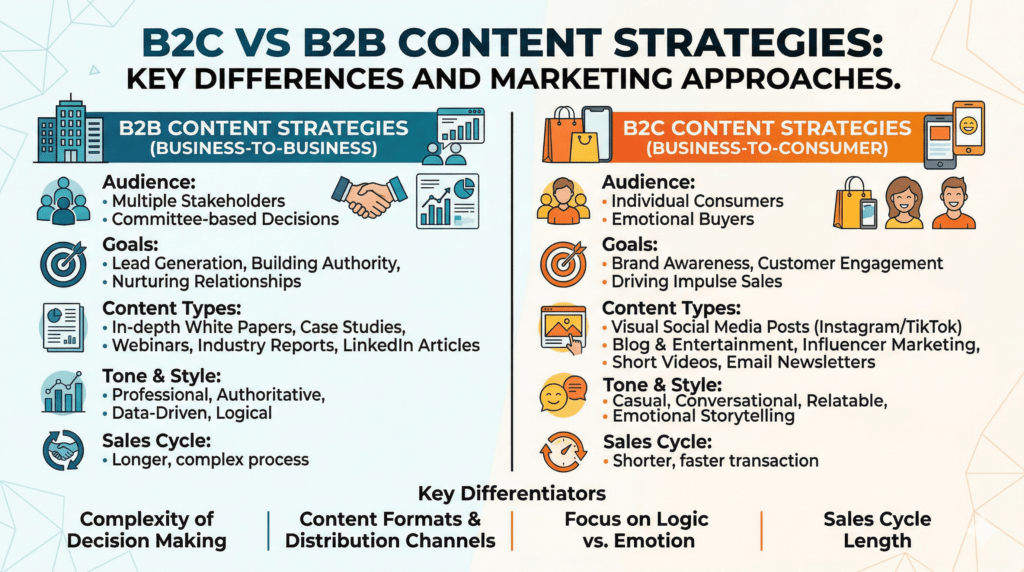
Content marketing has become one of the most powerful tools for businesses to attract customers, build trust, and drive sales. However, not all content strategies are the same. Businesses that sell directly to consumers (B2C) require a very different marketing approach compared to businesses that sell to other businesses (B2B).
Understanding the difference between B2C and B2B content strategies is essential for creating targeted marketing campaigns that generate engagement and conversions. While B2C marketing focuses on emotional appeal and quick purchasing decisions, B2B marketing prioritizes logic, trust, and long-term relationships.
In this article, we will explore the differences between B2B and B2C content strategies, their marketing approaches, examples, and best practices to help businesses maximize their digital marketing efforts.
Understanding B2C Content Marketing
B2C (Business-to-Consumer) marketing refers to businesses that sell products or services directly to individual consumers. The goal is usually to create engaging, persuasive content that motivates consumers to make quick purchase decisions.
Key Characteristics of B2C Content
- Emotion-driven content
B2C marketing focuses heavily on emotional triggers such as happiness, health, convenience, and lifestyle improvements. - Shorter buying cycle
Consumers often make quicker purchasing decisions, especially for affordable or everyday products. - Highly engaging formats
Content often includes:- Social media posts
- Short videos
- Blogs
- Influencer collaborations
- Email campaigns
- Simple and easy-to-understand messaging
B2C content avoids complex explanations and instead focuses on benefits and storytelling.
Example of B2C Content Strategy
A health supplement brand promoting herbal wellness products might publish blogs such as:
- Benefits of Ayurvedic supplements
- Natural ways to boost immunity
- Herbal remedies for stress and fatigue
For example, products like Nature Mayaa, a premium herbal supplement available here:
https://naturopathayurvedicremedies.com/product/nature-mayaa-premium-ayurvedic-herbal-supplement-naturopath-ayurvedic-remedies/
Such products can be promoted through educational blogs, health tips, and lifestyle content that encourages people to adopt natural wellness solutions.
Understanding B2B Content Marketing
B2B (Business-to-Business) marketing refers to companies selling products or services to other businesses. The decision-making process is usually more complex and involves multiple stakeholders.
Key Characteristics of B2B Content
- Logic and value-driven
B2B buyers focus on ROI, efficiency, and business growth rather than emotional triggers. - Longer buying cycle
Businesses often take weeks or months before making purchasing decisions. - Educational and research-based content
B2B content typically includes:- Whitepapers
- Case studies
- Industry reports
- Detailed blogs
- Webinars
- Authority and trust building
The goal is to position the brand as an industry expert.
Key Differences Between B2C and B2B Content Strategies
| Factor | B2C Marketing | B2B Marketing |
|---|---|---|
| Target Audience | Individual consumers | Businesses or organizations |
| Decision Drivers | Emotion, lifestyle, convenience | Logic, ROI, efficiency |
| Content Style | Entertaining and engaging | Informative and professional |
| Sales Cycle | Short | Long |
| Platforms | Social media, influencers, blogs | LinkedIn, webinars, case studies |
| Messaging | Simple and relatable | Data-driven and analytical |
Best Content Types for B2C Marketing
1. Blog Posts
Blogs that answer common consumer questions improve SEO and attract organic traffic.
2. Social Media Content
Platforms like Instagram, Facebook, and YouTube are powerful for brand visibility.
3. Video Marketing
Short videos explaining product benefits can significantly increase conversions.
4. Influencer Marketing
Consumers often trust recommendations from influencers and health experts.
Best Content Types for B2B Marketing
1. Case Studies
Real-world success stories demonstrate credibility and effectiveness.
2. Whitepapers
Detailed reports explaining industry insights or technical solutions.
3. LinkedIn Articles
Professional content that targets business decision-makers.
4. Webinars and Online Workshops
These help businesses showcase expertise and generate qualified leads.
SEO Strategy for B2B vs B2C
B2C SEO Focus
- High-volume consumer keywords
- Lifestyle-related content
- Product reviews and guides
- Mobile-friendly content
B2B SEO Focus
- Industry-specific keywords
- Long-form educational blogs
- Authority-building content
- Lead generation landing pages
Content Personalization in Modern Marketing
Modern content strategies increasingly rely on personalized marketing. Businesses now analyze customer behavior to deliver customized content.
Examples include:
- Personalized email campaigns
- AI-driven product recommendations
- Behavior-based advertising
Both B2C and B2B companies benefit from tailoring content to user interests and purchasing intent.
Conclusion
Both B2B and B2C content marketing strategies play a crucial role in digital marketing success, but they require different approaches.
B2C content focuses on emotion, engagement, and fast conversions, while B2B content emphasizes education, trust, and long-term business relationships. By understanding these differences, businesses can design more effective content strategies that attract the right audience and drive sustainable growth.
High-quality content combined with strong SEO strategies is essential for achieving online visibility and business success in today’s competitive digital landscape.
Digital Marketing & Website Development Support
If you want to grow your online business, improve SEO rankings, or build a powerful website, visit TechsterTech:
https://techstertech.com/
TechsterTech.com provides expert services in:
- Website Development
- SEO Optimization
- Digital Marketing
- E-commerce Solutions
With professional marketing strategies and modern web technology, TechsterTech helps businesses build strong digital brands and reach their target audience effectively.