Location-based marketing has become a powerful way for businesses to reach potential customers at the right place and the right time. One of the most effective techniques used today is geofencing advertising.
Geofencing ads allow businesses to target users within a specific geographic area—such as near a store, event venue, or competitor’s location—by delivering highly relevant ads to their mobile devices. This technology enables brands to influence customer decisions precisely when they are most likely to take action.
In this article, we’ll explain what geofencing ads are, how they work, and when businesses should use them.
1. What Are Geofencing Ads?
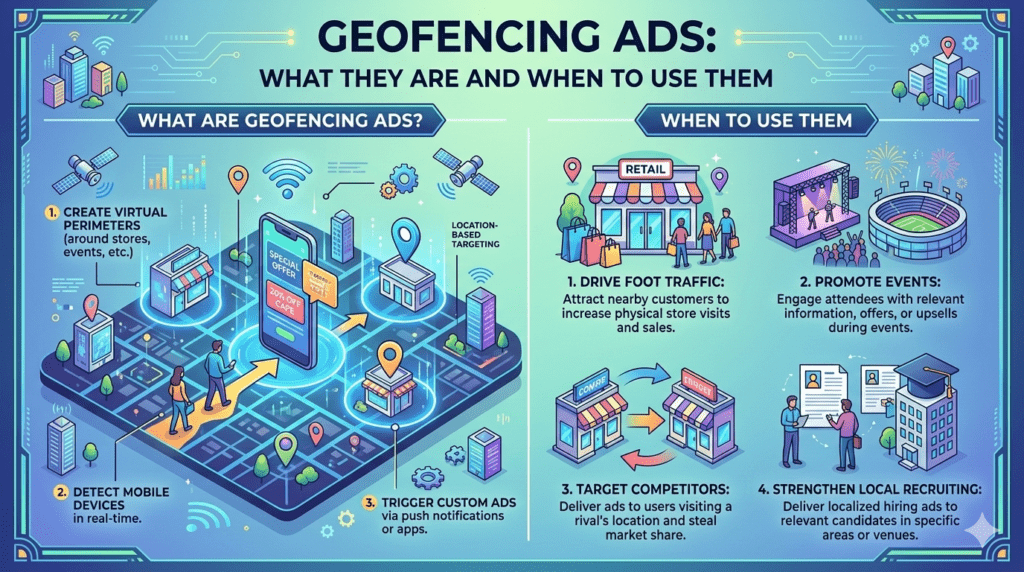
Geofencing ads are digital advertisements triggered when a user enters a predefined geographic boundary (called a geofence) around a specific location.
This virtual boundary is created using technologies such as:
- GPS
- Wi-Fi signals
- Mobile network data
- Bluetooth beacons
When someone enters the geofenced area, they may see ads on apps, websites, or social media platforms.
Businesses can run geofencing campaigns using advertising platforms like:
- Google Ads (Location Targeting)
🔗 https://ads.google.com/ - Meta Ads (Facebook & Instagram location targeting)
🔗 https://www.facebook.com/business/ads - Snapchat Ads (Location targeting)
🔗 https://forbusiness.snapchat.com/ - GroundTruth (Location-based advertising platform)
🔗 https://www.groundtruth.com/
2. How Geofencing Advertising Works
The process of geofencing advertising typically follows these steps:
Step 1: Define the Geographic Area
Marketers draw a virtual boundary around locations such as:
- Retail stores
- Competitor locations
- Event venues
- Airports or malls
Step 2: Detect Mobile Devices
When a smartphone with location services enabled enters this area, the advertising system detects it.
Step 3: Serve Targeted Ads
Ads are then delivered to users through mobile apps, social media platforms, or display networks.
Step 4: Track Engagement
Marketers can track metrics such as:
- Clicks
- Visits to store
- Conversions
- Ad engagement
Analytics tools like Google Analytics (GA4) can help track campaign performance:
🔗 https://analytics.google.com/
3. Types of Geofencing Advertising
1. Store Location Targeting
Businesses target users near their own stores to drive foot traffic.
Example:
A restaurant showing ads to people within 1 km of the location.
2. Competitor Targeting (Geo-conquesting)
Businesses target customers near competitor locations.
Example:
A gym running ads to people near another gym offering a free trial.
3. Event-Based Targeting
Advertisers run campaigns around major events such as:
- Sports matches
- Concerts
- Trade shows
Example:
Food delivery services targeting people attending large events.
4. Audience Retargeting
Some geofencing systems allow marketers to retarget users after they leave the location.
For example:
- Someone visits a car dealership
- They later see ads from competing dealerships
4. When Should Businesses Use Geofencing Ads?
Geofencing ads work best in situations where location influences purchase decisions.
🛍 Retail Stores
Drive foot traffic to physical stores.
🍔 Restaurants & Cafés
Promote nearby lunch or dinner deals.
🏨 Hotels & Travel
Target travelers near airports or tourist areas.
🎓 Educational Institutes
Promote courses near campuses or coaching centers.
🏢 Real Estate
Advertise properties near housing communities.
🚗 Automotive Businesses
Target people visiting car dealerships or auto expos.
5. Benefits of Geofencing Advertising
🎯 Highly Targeted Marketing
Ads reach people in the exact location where they are most likely to convert.
📱 Mobile-First Advertising
Most geofencing campaigns focus on mobile users, where engagement is highest.
📊 Better Conversion Rates
Location-based targeting improves ad relevance and increases conversions.
💰 Efficient Ad Spend
Businesses can reduce wasted impressions by targeting only relevant audiences.
6. Challenges and Limitations
Despite its advantages, geofencing ads have some challenges.
Privacy Concerns
Users must enable location tracking for geofencing to work.
Limited Reach
Geofencing only targets users within a defined location.
Requires Mobile Engagement
Desktop users may not be reachable through geofencing.
Accuracy Limitations
GPS signals may not always be precise in crowded or indoor areas.
7. Best Practices for Successful Geofencing Campaigns
To maximize results:
✔ Keep geofences realistic (500m–2km radius)
✔ Combine with strong ad creatives
✔ Offer time-sensitive promotions
✔ Track conversions and store visits
✔ Retarget users after they leave the location
Advertising dashboards such as Google Ads Manager can help manage and optimize these campaigns:
🔗 https://ads.google.com/home/tools/ads-manager/
Conclusion
Geofencing advertising is a powerful strategy for businesses that rely on location-based customers. By targeting users in specific geographic areas, businesses can deliver highly relevant ads at the moment when people are most likely to make purchasing decisions.
Whether you run a retail store, restaurant, event promotion, or local service business, geofencing ads can significantly improve customer engagement and foot traffic.
For location-based advertising strategy, Google Ads management, Meta Ads campaigns, and data-driven marketing solutions, partner with TechsterTech — your trusted digital growth partner.
🔗 https://techstertech.com