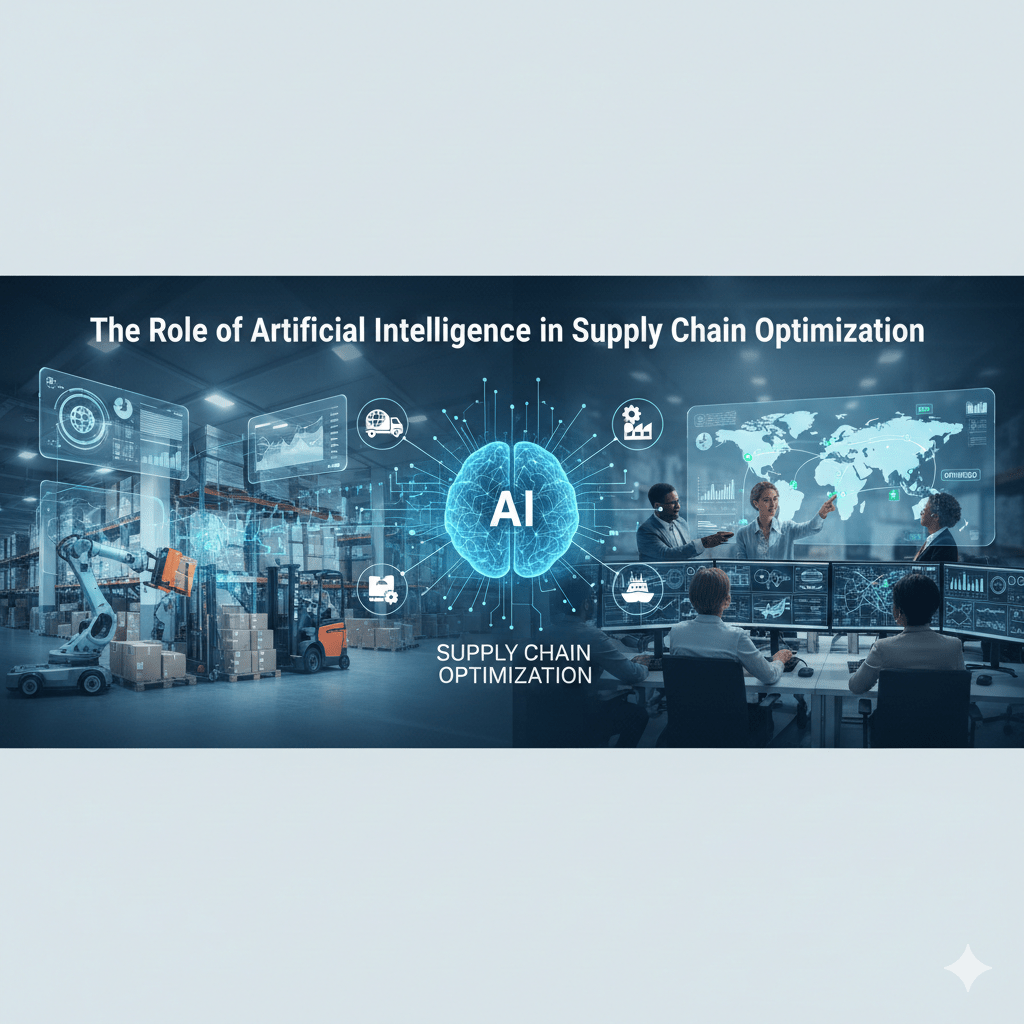
Modern supply chains are more complex than ever. With global sourcing, fluctuating consumer demand, unpredictable disruptions, and the need for rapid delivery, businesses must operate smarter and faster. Traditional supply chain models can no longer keep up — and this is where Artificial Intelligence (AI) is transforming the industry.
AI brings speed, accuracy, automation, and predictive intelligence to every stage of the supply chain, helping organizations improve efficiency, lower costs, and enhance customer satisfaction.
Let’s explore how AI is reshaping supply chain optimization in 2025 and beyond.
1. Predictive Demand Forecasting
AI analyzes vast data sets — historical sales, market trends, seasonality, social media signals, and even weather patterns — to accurately predict future demand.
Benefits:
- Reduced stockouts
- Lower inventory carrying costs
- Improved production planning
- Better resource allocation
With AI-driven forecasting, companies move from reactive to proactive decision-making.
2. Intelligent Inventory Management
AI helps maintain optimal inventory levels by:
- Predicting demand fluctuations
- Monitoring real-time stock levels
- Automating reorder triggers
- Preventing overstock and understock situations
These capabilities ensure healthy inventory flow while minimizing operational inefficiencies.
3. Warehouse Automation and Robotics
AI-powered robots and systems automate warehouse operations such as:
- Picking and packing
- Sorting and labeling
- Shelf scanning
- Order fulfillment
Benefits:
- Faster operations
- Lower labor costs
- Fewer errors
- Higher safety
Smart warehouses are becoming the backbone of modern supply chains.
4. Route Optimization and Smart Logistics
AI uses real-time data to determine the most efficient delivery routes by analyzing:
- Traffic patterns
- Weather conditions
- Fuel costs
- Delivery windows
- Vehicle capacity
This leads to:
- Faster delivery times
- Reduced transportation costs
- Better fleet utilization
- Improved customer satisfaction
AI-driven logistics are essential for e-commerce and hyperlocal delivery networks.
5. Supplier Risk Management
AI monitors supplier performance by tracking:
- Delivery timelines
- Order accuracy
- Financial stability
- Geopolitical risks
- Compliance issues
It helps companies detect early signs of supply chain disruptions and diversify suppliers when needed.
This reduces dependence on a single source and minimizes operational risk.
6. Quality Control and Defect Detection
Computer vision systems use AI to inspect goods in real time during manufacturing and packaging.
AI can detect:
- Cracks
- Misalignment
- Discoloration
- Defects invisible to the human eye
This increases product quality and reduces costly returns or recalls.
7. Automation of Back-Office Processes
AI automates repetitive tasks such as:
- Invoice processing
- Purchase order management
- Data entry
- Compliance documentation
Automation speeds up workflows and reduces human errors, enabling teams to focus on strategic decisions.
8. Real-Time Visibility Across the Entire Supply Chain
AI integrates data from multiple sources — warehouses, suppliers, logistics partners, sensors, and customer platforms — to offer end-to-end supply chain visibility.
This transparency allows companies to:
- Track shipments in real time
- Respond quickly to disruptions
- Ensure compliance
- Improve planning accuracy
Real-time visibility leads to more resilient and agile supply chains.
9. Enhancing Customer Experience
AI improves the customer journey by:
- Providing accurate delivery estimates
- Sending automated delay notifications
- Offering proactive solutions to issues
- Enhancing product availability
When customers receive accurate and timely information, trust and satisfaction increase significantly.
10. Building Resilient, Future-Ready Supply Chains
AI helps businesses anticipate disruptions such as:
- Natural disasters
- Political instability
- Raw material shortages
- Demand spikes
- Manufacturing delays
Companies can simulate scenarios, prepare contingency plans, and maintain operational continuity.
Conclusion
Artificial Intelligence is revolutionizing supply chain optimization by providing predictive insights, real-time visibility, automation, and enhanced decision-making. From forecasting demand to optimizing delivery routes and ensuring product quality, AI-powered supply chains are more agile, resilient, and customer-centric.
As AI continues to evolve, organizations that embrace these technologies will lead the next era of supply chain innovation.
For expert support with AI adoption, automation workflows, digital optimization, and supply chain technology implementation, visit TechsterTech.com — your trusted partner for future-ready digital transformation.