Artificial Intelligence (AI) is transforming industries worldwide, but perhaps no sector is experiencing deeper disruption than healthcare. From early disease detection and precision diagnostics to automated workflows and personalized treatment plans, AI is redefining how patients receive care and how medical professionals operate.
As hospitals, clinics, and research institutions adopt AI-powered technologies, healthcare is becoming faster, more accurate, more accessible, and more cost-efficient than ever before.
This article explores how AI is reshaping healthcare, the opportunities it creates, and the challenges the industry must overcome.
1. Improved Diagnostics and Early Detection
AI algorithms can analyze:
- Medical images (X-rays, MRIs, CT scans)
- Pathology slides
- Lab results
- Genomic data
AI models detect abnormalities faster and with higher accuracy than traditional methods.
For example:
- AI tools identify tumors earlier than radiologists in some cases.
- Machine learning models detect heart conditions from ECG patterns.
- Deep learning algorithms recognize diabetic retinopathy from retinal scans.
Early detection leads to better outcomes, reduced complications, and lower treatment costs.
2. Personalized Medicine and Treatment Plans
AI analyzes individual data such as:
- Genetic profile
- Lifestyle
- Medical history
- Existing conditions
Based on this, AI can recommend personalized treatment plans tailored to each patient. This is especially useful in:
- Oncology
- Cardiology
- Rare genetic disorders
- Chronic disease management
Personalized treatment increases recovery rates and reduces the likelihood of adverse reactions.
3. AI-Powered Drug Discovery
Traditional drug development takes 10–15 years and costs billions.
AI accelerates this by:
- Predicting molecule interactions
- Identifying potential drug candidates
- Simulating clinical trial outcomes
- Analyzing massive medical databases in minutes
Pharmaceutical companies now use AI to cut research time dramatically, leading to faster innovation and more affordable medications.
4. Virtual Assistants and Remote Patient Monitoring
AI-powered tools such as:
- Chatbots
- Virtual nurses
- Wearable health devices
- Remote monitoring systems
help track patient health in real time.
Wearables can monitor:
- Heart rate
- Oxygen levels
- Blood glucose
- Sleep patterns
AI alerts patients and doctors before issues become critical, improving care for elderly, chronic, and rural populations.
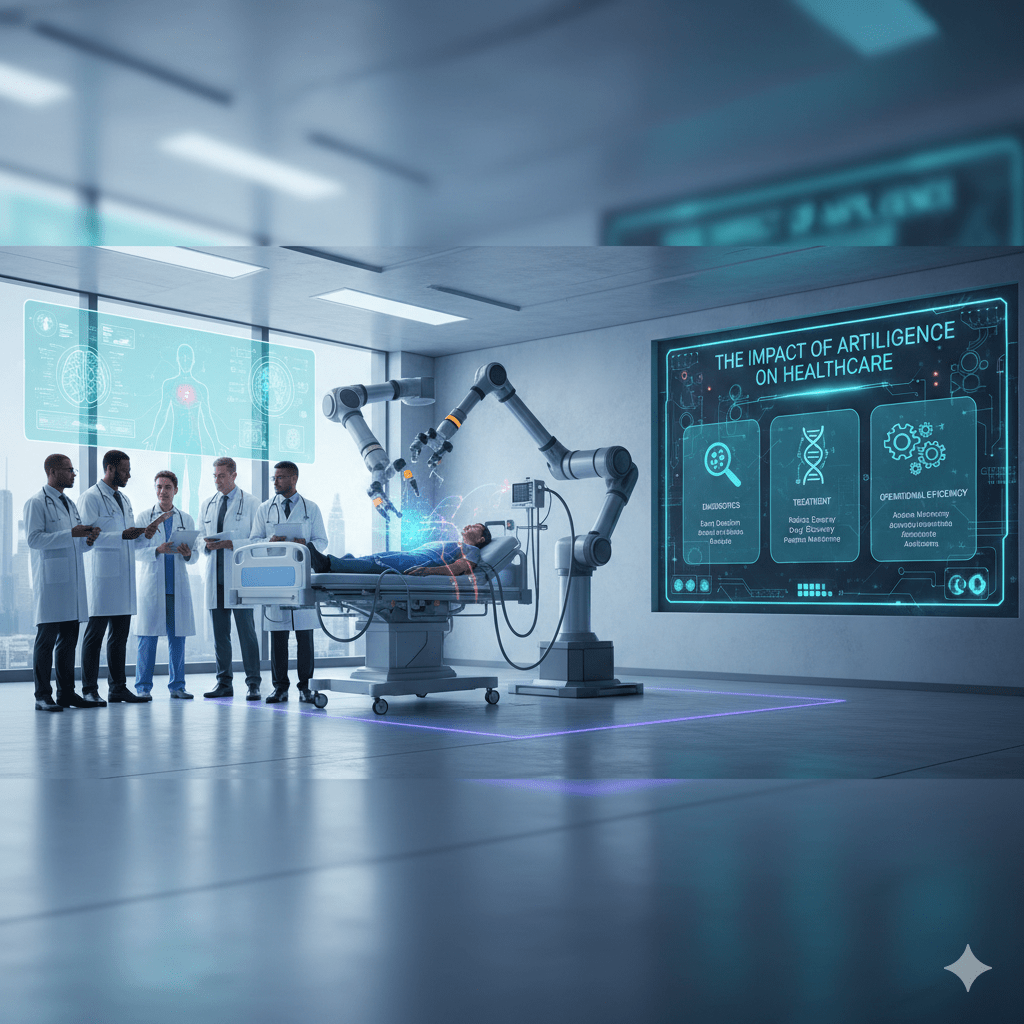
5. Robotic Surgeries
AI-assisted surgical robots perform minimally invasive procedures with unmatched precision.
Benefits include:
- Smaller incisions
- Faster recovery
- Reduced risk of infection
- Higher surgical accuracy
Robotic systems like Da Vinci and AI-powered navigation tools are now widely used in orthopedics, urology, and cardiovascular surgeries.
6. Enhanced Administrative Efficiency
AI automates:
- Appointment scheduling
- Billing and claims processing
- Medical record management
- Supply chain operations
This reduces hospital workload, minimizes human error, and frees staff to focus on patient care.
7. Predictive Analytics for Better Decision Making
AI predicts:
- Patient admission rates
- Disease outbreaks
- Emergency room traffic
- Resource requirements
- Patient mortality risks
Hospitals use predictive models to optimize operations, reduce costs, and improve patient outcomes.
8. Mental Health Support Through AI
AI-driven mental health tools offer:
- Mood tracking
- Cognitive therapy support
- Virtual counseling
- Crisis prediction
Platforms like AI chatbots provide instant emotional support and help monitor mental health patterns.
Challenges and Ethical Concerns
Despite its benefits, AI in healthcare faces challenges:
✔ Data privacy and security
Medical records are extremely sensitive.
✔ Algorithmic bias
AI models may favor certain groups if trained on biased data.
✔ Lack of transparency
AI decisions (especially in diagnostics) must be explainable.
✔ Regulatory hurdles
Healthcare requires strong oversight to ensure safety.
✔ Human–AI collaboration
Doctors must trust and understand AI tools for adoption.
Overcoming these challenges is essential for responsible AI integration.
Conclusion
AI is revolutionizing healthcare by making it smarter, faster, and more personalized. From early detection and treatment planning to robotic surgeries and remote monitoring, AI enhances patient outcomes and transforms how medical professionals deliver care.
While challenges like privacy, bias, and regulation remain, the future of healthcare is undeniably AI-driven. Organizations that embrace these technologies today will lead the next wave of medical innovation.
For businesses seeking AI-powered solutions, automation systems, or digital transformation support, visit TechsterTech.com — your trusted partner for modern digital growth.