Introduction
Digital marketing is one of the most dynamic and fast-paced fields today. Marketers constantly manage campaigns, analyze data, create content, monitor trends, and engage with audiences across multiple platforms. While this dynamic environment creates opportunities for growth and innovation, it can also lead to digital marketing burnout—a state of mental, emotional, and physical exhaustion caused by prolonged stress and workload.
Burnout not only affects productivity but also impacts creativity, decision-making, and overall job satisfaction. Therefore, adopting effective strategies to prevent burnout is essential for maintaining both personal well-being and professional performance.
In this blog, we will explore the best practices to avoid digital marketing burnout and maintain a healthy work-life balance while achieving marketing success.
Understanding Digital Marketing Burnout
Digital marketing burnout occurs when professionals feel overwhelmed due to continuous pressure, unrealistic expectations, or excessive workload. Common signs include:
- Constant fatigue and lack of motivation
- Reduced creativity and innovation
- Difficulty concentrating on tasks
- Feeling overwhelmed by campaign performance metrics
- Loss of enthusiasm for marketing strategies and projects
If not addressed early, burnout can negatively affect both individual performance and business growth.
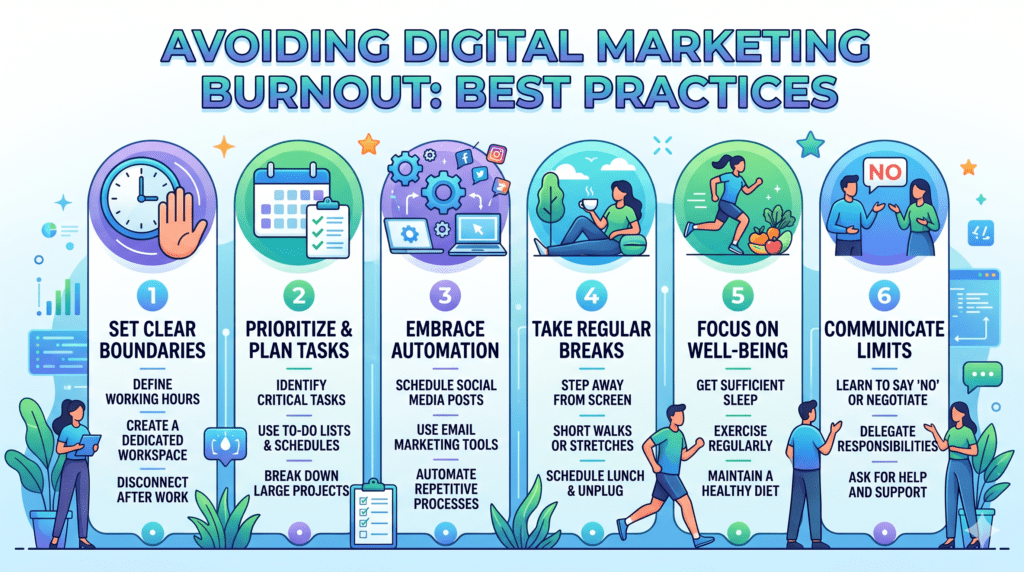
Best Practices to Avoid Digital Marketing Burnout
1. Prioritize and Plan Your Work
One of the main causes of burnout is handling too many tasks simultaneously. Creating a structured plan helps in managing workload effectively.
Tips:
- Use project management tools like Trello, Asana, or Notion.
- Break large campaigns into smaller achievable tasks.
- Set realistic deadlines for each activity.
A well-organized workflow reduces stress and improves efficiency.
2. Automate Repetitive Marketing Tasks
Digital marketing involves many repetitive tasks such as email scheduling, social media posting, and analytics reporting. Automation tools can significantly reduce workload.
Examples of automation tools:
- Social media scheduling tools
- Email marketing automation platforms
- CRM systems for customer management
Automation allows marketers to focus on strategy rather than routine tasks.
3. Set Realistic Goals and Expectations
Unrealistic performance targets can cause constant pressure. Instead of chasing unrealistic numbers, focus on measurable and achievable marketing goals.
Use the SMART framework:
- Specific
- Measurable
- Achievable
- Relevant
- Time-bound
This approach ensures sustainable growth without overwhelming the marketing team.
4. Maintain a Healthy Work-Life Balance
Working continuously without breaks reduces productivity and creativity. Maintaining balance is crucial for long-term performance.
Best practices include:
- Taking regular breaks during work hours
- Setting clear work boundaries
- Avoiding unnecessary late-night work
- Spending time with family or engaging in hobbies
A refreshed mind leads to better marketing strategies and decision-making.
5. Focus on Data, Not Perfection
Digital marketers often chase perfection in campaigns, which can lead to unnecessary stress. Instead, focus on data-driven improvements.
Marketing campaigns improve through testing and optimization. Accepting small imperfections helps reduce pressure and encourages continuous improvement.
6. Continuous Learning Without Overloading
Digital marketing trends evolve rapidly, making learning essential. However, trying to master everything at once can lead to overwhelm.
Instead:
- Learn one skill at a time
- Follow reliable industry blogs
- Attend webinars and online courses periodically
Consistent learning keeps marketers competitive without causing mental exhaustion.
7. Collaborate and Delegate Tasks
Marketing teams often experience burnout when individuals handle too many responsibilities alone.
Effective teamwork helps in:
- Sharing workload
- Improving creative ideas
- Increasing productivity
Delegation allows marketers to focus on their strengths while ensuring tasks are completed efficiently.
8. Monitor Mental Health and Stress Levels
Mental health is just as important as productivity. If stress levels increase, it is important to take preventive steps.
Simple techniques include:
- Practicing meditation or mindfulness
- Taking short walks during breaks
- Engaging in physical activities
These practices improve focus and reduce mental fatigue.
Conclusion
Digital marketing is an exciting yet demanding profession. While achieving marketing goals is important, maintaining mental well-being is equally essential. By planning tasks, automating repetitive processes, setting realistic goals, maintaining work-life balance, and focusing on continuous improvement, marketers can successfully avoid burnout and sustain long-term productivity.
For businesses and marketers who want to build strong digital strategies without overwhelming workloads, professional support can make a significant difference.
If you want to build a powerful online presence, improve website performance, or grow your business through SEO and digital marketing, visit https://techstertech.com/.
TechsterTech provides professional services in web development, SEO optimization, digital marketing strategies, and technical support to help businesses grow online effectively.