Introduction
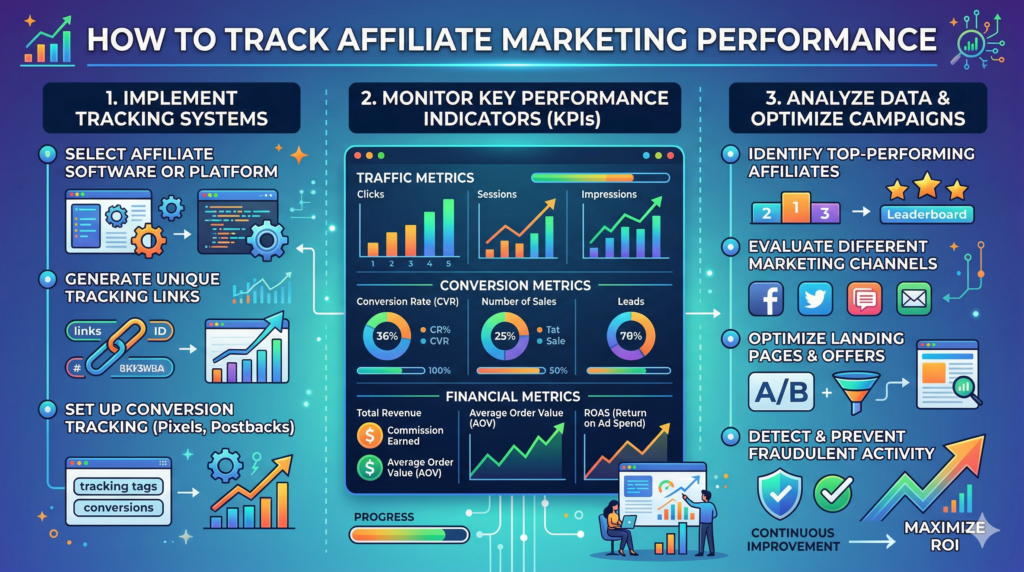
Affiliate marketing has become one of the most powerful digital marketing strategies for businesses and bloggers. It allows companies to promote their products through affiliates who earn commissions for generating sales or leads. However, the success of an affiliate marketing campaign depends heavily on performance tracking. Without proper tracking, businesses cannot measure results, optimize campaigns, or identify profitable affiliates.
Tracking affiliate marketing performance helps businesses understand which marketing strategies work best, which affiliates generate the most conversions, and how to improve overall return on investment (ROI). In this article, we will explore the most effective methods and tools for tracking affiliate marketing performance.
Why Tracking Affiliate Marketing Performance is Important
Tracking affiliate performance provides valuable insights that help businesses grow their marketing strategy. Some key benefits include:
1. Measuring ROI
Businesses can determine whether affiliate campaigns are profitable by tracking sales, commissions, and marketing costs.
2. Identifying Top Performing Affiliates
Performance tracking helps identify affiliates who generate the highest traffic and conversions.
3. Optimizing Marketing Strategies
Data analysis helps marketers understand which content, platforms, and campaigns perform best.
4. Preventing Fraud
Tracking tools help detect suspicious activity, fake traffic, or invalid clicks.
Key Metrics to Track in Affiliate Marketing
1. Click-Through Rate (CTR)
CTR measures how many users click on affiliate links compared to the number of impressions.
Formula:
CTR = (Number of Clicks ÷ Number of Impressions) × 100
A higher CTR indicates that your promotional content is engaging and relevant.
2. Conversion Rate
Conversion rate shows how many visitors complete the desired action (purchase, sign-up, etc.).
Formula:
Conversion Rate = (Conversions ÷ Total Clicks) × 100
This metric helps identify whether traffic generated by affiliates is valuable.
3. Cost Per Acquisition (CPA)
CPA measures how much it costs to acquire one customer through affiliate marketing.
Formula:
CPA = Total Affiliate Commission ÷ Total Conversions
Lower CPA indicates a more profitable campaign.
4. Average Order Value (AOV)
AOV helps businesses understand the average amount spent by customers through affiliate referrals.
Formula:
AOV = Total Revenue ÷ Number of Orders
Higher AOV means affiliates are attracting more valuable customers.
5. Return on Investment (ROI)
ROI measures the overall profitability of affiliate marketing campaigns.
Formula:
ROI = (Revenue – Marketing Cost) ÷ Marketing Cost × 100
Tools to Track Affiliate Marketing Performance
1. Google Analytics
Google Analytics helps track traffic sources, conversions, and user behavior from affiliate links.
Features include:
- Tracking referral traffic
- Monitoring user engagement
- Measuring conversion goals
2. Affiliate Tracking Software
Dedicated affiliate tracking platforms help manage affiliate networks and analyze performance.
Popular features include:
- Real-time tracking
- Commission management
- Fraud detection
Examples of affiliate tracking tools include Post Affiliate Pro, Tapfiliate, and Voluum.
3. UTM Parameters
UTM parameters are special tags added to URLs to track marketing campaigns.
Example:https://example.com/product?utm_source=affiliate&utm_medium=referral&utm_campaign=sale
These tags help identify the exact source of traffic.
4. Affiliate Dashboards
Most affiliate programs provide dashboards where affiliates and businesses can track:
- Clicks
- Sales
- Commissions
- Conversion rates
This data helps affiliates improve their promotional strategies.
Best Practices for Effective Affiliate Tracking
1. Use Unique Affiliate Links
Each affiliate should have a unique tracking link to accurately measure performance.
2. Track Multiple Metrics
Do not rely on a single metric. Analyze CTR, conversion rate, revenue, and customer lifetime value.
3. Monitor Traffic Quality
High traffic does not always mean high sales. Focus on quality traffic that converts.
4. Regularly Analyze Reports
Weekly and monthly performance analysis helps optimize campaigns quickly.
5. Reward High Performing Affiliates
Offer bonuses or higher commissions to top affiliates to encourage better results.
Affiliate Marketing for Health and Wellness Products
Affiliate marketing can be especially powerful for health and wellness products. Bloggers, influencers, and health experts can promote trusted products to their audiences.
For example, herbal supplements and natural wellness products can gain strong traction through affiliate marketing when promoted by trusted content creators.
If you are interested in natural Ayurvedic wellness, you can explore Nature Mayaa, a premium herbal supplement designed to support overall well-being.
👉 Product Page:
https://naturopathayurvedicremedies.com/product/nature-mayaa-premium-ayurvedic-herbal-supplement-naturopath-ayurvedic-remedies/
Conclusion
Tracking affiliate marketing performance is essential for building a profitable and scalable marketing strategy. By monitoring key metrics such as CTR, conversion rate, CPA, and ROI, businesses can optimize their campaigns and maximize revenue.
Using tools like Google Analytics, affiliate tracking software, and UTM parameters allows marketers to gain deeper insights into campaign performance. With proper tracking and analysis, affiliate marketing can become one of the most powerful revenue-generating channels for businesses.
To build powerful affiliate marketing platforms, optimized websites, and strong SEO strategies, professional digital solutions are essential.
For expert SEO services, website development, and digital marketing solutions, visit:
https://techstertech.com/
TechsterTech helps businesses grow online with advanced marketing strategies, high-performing websites, and result-driven SEO solutions.